
 Click main image to view in full screen. Unlock all 17 preview images:
Online Products Marketplace Financial Model – Excel XLSX
Excel (XLSX)


BENEFITS OF THIS DOWNLOADABLE EXCEL DOCUMENT
- Provides a dynamic up to 10-year financial forecast for an Online Products Marketplace business.
- Suitable for either a startup or operating company
- Includes all necessary data needed to forecast company's financial and operating activities
ECOMMERCE EXCEL DESCRIPTION
A products marketplace is an online platform where multiple sellers list and sell a wide range of physical or digital goods to buyers. It acts as an intermediary, providing tools for product listings, payment processing, and customer service, while earning revenue through commissions or fees. Marketplaces offer buyers variety and convenience in one place, and give sellers access to a broad customer base without needing to build their own storefront. Examples include platforms like Amazon, Etsy, and eBay.
This Financial model provides a 10-year financial analysis for a Products Marketplace Platform and helps owners assess unit economics, profitability, and scalability, guiding strategic decisions on pricing, market expansion, and platform optimization. It includes assumptions and calculations of Sellers & Buyers Acquisition through Paid and Organic Marketing (CAC, conversion and churn rates, etc.), Sellers Listings, Revenue from Sellers (setup fees, listing fees, subscriptions), Revenue from Orders (AOV, orders per buyer, platform commission, order fee), Advertising Revenue, Cost of Sales (payment gateway fees, customer support, refunds, chargebacks, insurance, etc.), Payroll, Operating Expenses, Fixed Assets & Depreciation, Financing through Debt & Equity and Exit Valuation assumptions in case of a potential sale of the business.
The model follows Financial Modeling Best Practices principles and is fully customizable.
Detailed instructions for the functionality of the model are included in the Excel file.
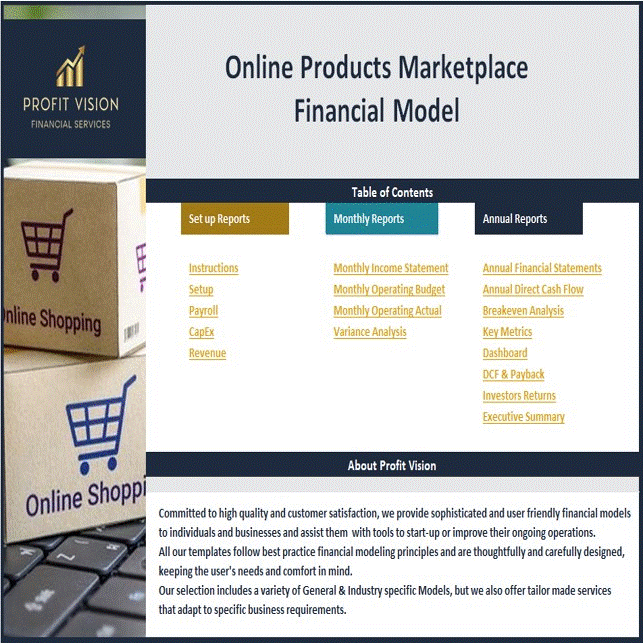
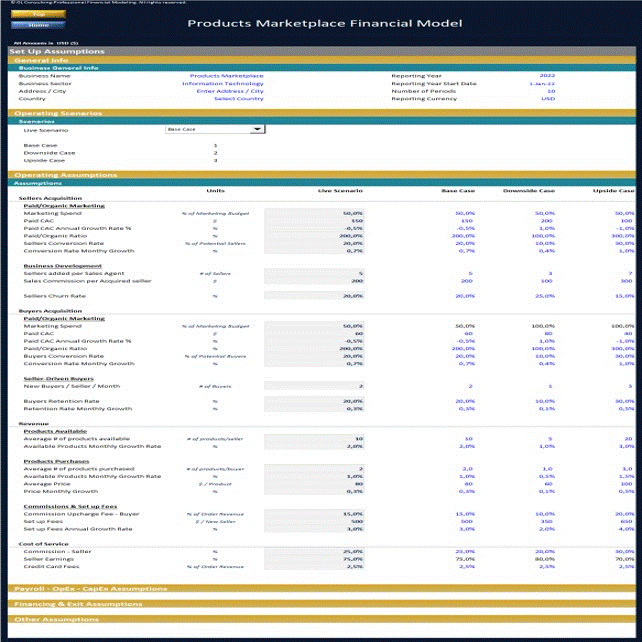
Model Inputs and Setup Reports:
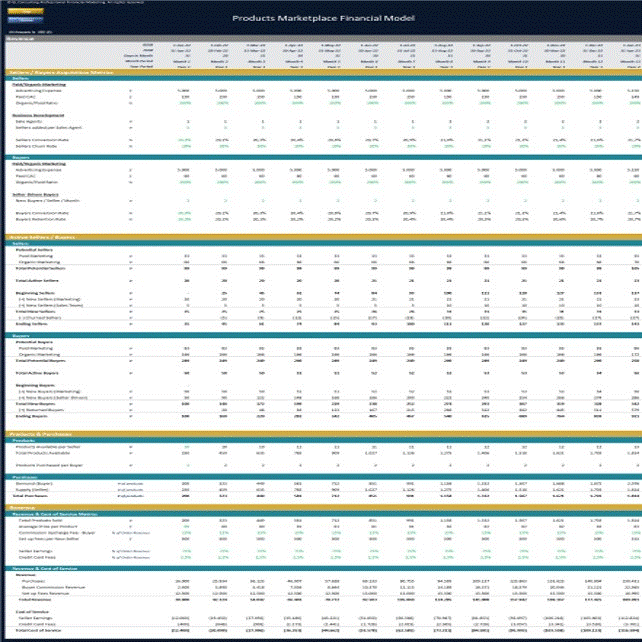
• Sellers and Buyers Acquisition metrics (Paid & Organic, Conversion Rates, Churn Rates, etc)
• Revenue from Sellers (setup fees, listing fees, subscriptions, advertising)
• Revenue from Buyers (AOV, platfrom order commission, order fee)
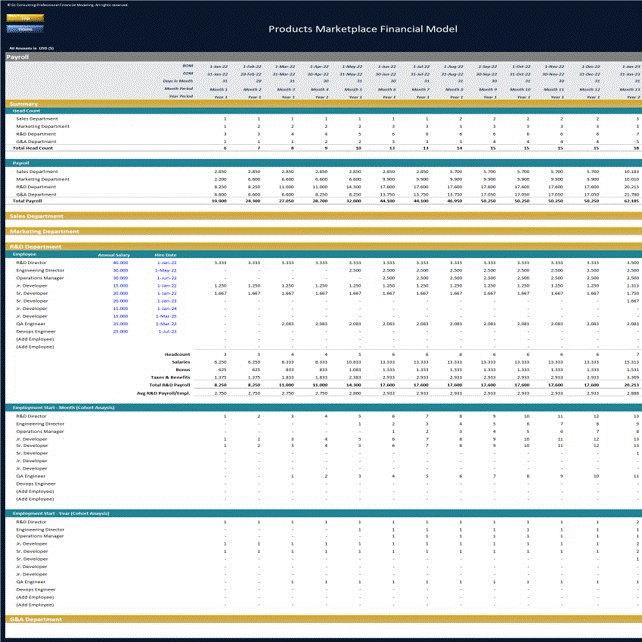
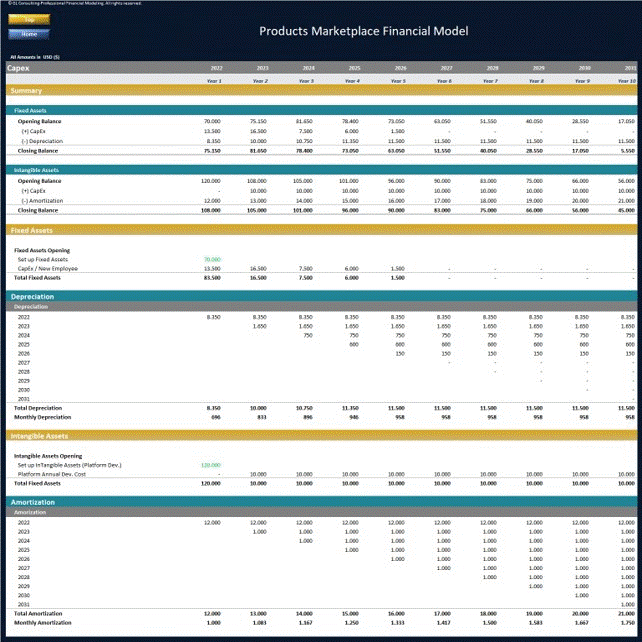
• Direct Costs, Payroll, OpEx & CapEx Assumptions
• Forecast Scenarios
• Financing & Capital Structure – Uses & Sources of Cash analysis (Financing through Equity & Debt)
• Exit Year Scenario & Valuation Multiples
Output Reports:
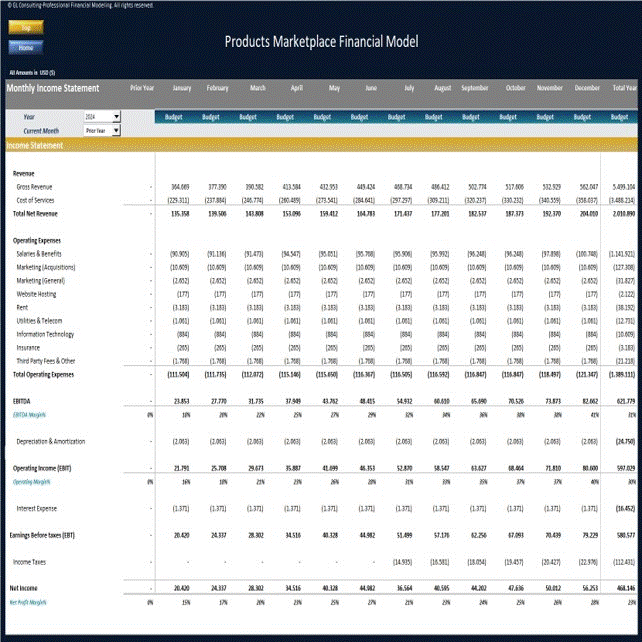
• Monthly Operating Budget & Budget summary per Year
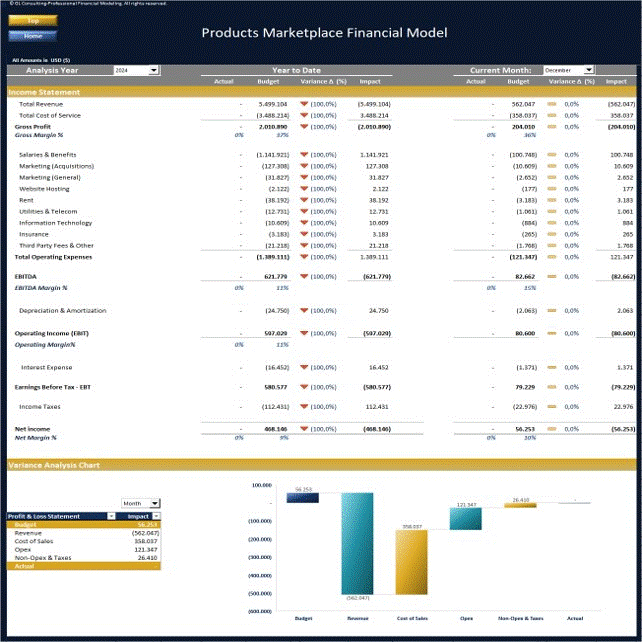
• Budget vs. Actual Variance Analysis
• 10-Year Financial Forecast (3 Statement Model)
• Breakeven Analysis, KPIs and Financial Ratios (Revenue & Cost Metrics, ROE, ROIC, Profit Margins, etc.)
• Performance Dashboard
• Business Valuation (incl. DCF, Terminal Value, Unlevered & Levered Cash Flow, Project Return Metrics & Sensitivity Analysis)
• Investors Distribution Waterfall Model
• Professional Executive Summary
Help & Support
Committed to high quality and customer satisfaction, all our templates follow best-practice financial modeling principles and are thoughtfully and carefully designed, keeping the user's needs and comfort in mind.
No matter if you have no experience or are well versed in finance, accounting, and the use of Microsoft Excel, our professional financial models are the right tools to boost your business operations!
If you, however, experience any difficulty while using this template and you are not able to find the appropriate guidance in the provided instructions, please feel free to contact us for assistance.
If you need a template customized for your business requirements, please e-mail us and provide a brief explanation of your specific needs.
Got a question about the product? Email us at support@flevy.com or ask the author directly by using the "Ask the Author a Question" form. If you cannot view the preview above this document description, go here to view the large preview instead.
TOPIC FAQ
What are the typical revenue streams for an online products marketplace and how are they modeled?
Marketplaces commonly generate revenue from seller-facing fees (setup fees, listing fees, subscriptions), order-related income (platform commission, order fees, AOV-driven order volume), and advertising. Financial models capture each stream as separate line items with volume and price assumptions, for example listing fees, subscriptions, and advertising revenue.How should I model seller and buyer acquisition costs for a marketplace forecast?
Acquisition is modeled by channel (paid vs. organic), tracking CAC, conversion rates from prospect to active user, and churn rates to forecast net active buyers and sellers over time. These inputs feed customer cohorts and monthly forecasts to produce CAC-driven unit economics and churn-adjusted growth projections.Which financial statement outputs are essential for marketplace forecasting?
A marketplace forecast typically includes a monthly operating budget, a consolidated 3-statement model (income statement, balance sheet, cash flow) over the forecast horizon, breakeven and KPI reporting, and a performance dashboard; Flevy's Online Products Marketplace Financial Model produces a 10-year 3-statement forecast.What valuation methods are commonly used for marketplaces in financial models?
Valuation in marketplace models typically uses discounted cash flow (DCF) techniques with terminal value, plus analysis using valuation multiples, and can present both unlevered and levered cash flows; exit year scenarios and valuation multiples are used to estimate potential sale value via DCF and terminal value assumptions.What should I look for when buying a marketplace financial model template?
Buyers should confirm the template includes seller and buyer acquisition inputs (paid/organic CAC, conversion, churn), separate revenue streams for sellers and orders, direct costs and operating expenses, scenario/sensitivity capabilities, financing structure and exit valuation outputs, and clear instructions and customization options, including a 3-statement model and scenario forecasts.How much Excel or finance experience do I need to use a marketplace financial model?
Templates often include detailed instructions and built-in calculations so both non-experts and experienced financial users can work with them; support and customization services are commonly offered if you need assistance. The Excel file typically contains step-by-step guidance for all model functionality.If I’m testing pricing and commission strategy, which model inputs matter most?
Key inputs are average order value (AOV), orders per buyer, platform commission rate, fixed order fees, the number of seller listings, and seller-facing fees (setup, listing, subscriptions). Adjusting these inputs shows revenue sensitivity to commission and pricing choices, highlighting impacts on gross revenue and take rate.How can I model growth scenarios and funding needs before pitching investors?
Use scenario-based forecasts to vary acquisition (paid vs. organic), conversion and churn assumptions, and revenue metrics, then model uses & sources of cash for equity and debt financing. Combine sensitivity analysis with an investors distribution waterfall and exit valuation to illustrate returns under different scenarios.Source: Best Practices in Ecommerce, Marketplace, Integrated Financial Model Excel: Online Products Marketplace Financial Model Excel (XLSX) Spreadsheet, Profit Vision
ABOUT THE AUTHOR

Profit Vision provides Consulting & Outsourced Financial Services as well as Financial Planning & Performance analysis to small and mid-size businesses by implementing efficient and effective tools to assist them with start-up business plans or improve their ongoing operations.
Our range of services include Financial & Operational Analysis, Business Planning, Budgeting & Forecasting, Cash Flow
... [read more]
Ask the Author a Question
You must be logged in to contact the author.




























